第1章 舟越桂・初期ポートレート作品考―まなざしの先にあるもの―Chapter 1. An Examination of Katsura Funakoshi's Early Portrait Sculptures: What Lies Beyond the Gaze
English Summary
Katsura Funakoshi belonged to the same postwar generation as the author, sharing the social upheavals of student movements, rapid economic growth, and Japan's transition into a consumer society. While contemporary sculpture increasingly embraced abstraction, Funakoshi quietly continued creating figurative sculptures that explored the inner reality of ordinary human beings.
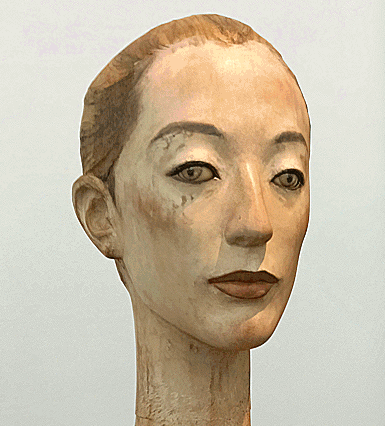
The defining feature of his early portrait sculptures is their gaze. His figures do not look directly at the viewer, nor do they attempt to communicate emotions, messages, or ideals. Their slightly divergent eyes refuse conventional visual dialogue, yet they hold the viewer in place. This gaze does not transmit meaning; instead, it creates shared time.
Unlike traditional portraiture, which invites interpretation through eye contact, Funakoshi's sculptures suspend communication. Viewers cannot fully read the expression, receive an answer, or easily leave the work behind. Instead, they gradually enter a condition of silent coexistence with the sculpture.
Within the framework of the Sculpture Matrix, this functions as the entrance to "shared presence" (dōza). The sculpture does not ask to be interpreted but gently releases the viewer from the need to judge or explain. Meaning is temporarily suspended, allowing both sculpture and viewer simply to exist together within the same silence.
This experience unfolds over time. Funakoshi deliberately slows perception, preventing immediate understanding and encouraging prolonged contemplation. Rather than producing instant interpretation, his sculptures generate duration itself. Their essence emerges gradually through sustained presence.
Testimonies from people who modeled for Funakoshi reinforce this understanding. Many remarked that the sculptures resembled them yet did not truly portray their personalities or inner psychology. Instead, they sensed that the works revealed something more fundamental—something purer or somehow beyond themselves. Funakoshi was not sculpting individual character but capturing what may be called "a fragment of existence": the density of simply having existed at a particular moment.
The use of camphor wood further strengthens this effect. Its warmth, organic texture, and visible grain preserve a sense of living material beneath the painted surface. As a result, the figures appear to stand between humanity and nature, suggesting that both emerge from the same source of life. Viewing these sculptures becomes less an act of interpretation than an experience of dwelling quietly in their presence.
Ultimately, the gaze in Funakoshi's early sculptures is directed neither toward the model, the viewer, nor an ideal future. Instead, it quietly acknowledges the fundamental condition of human existence itself—the simple fact that human beings find themselves existing in the world. The gaze does not seek to see; it accepts being.
These early portrait sculptures therefore represent the starting point of Funakoshi's artistic journey. Later works featuring sphinxes and images of prayer do not abandon this gaze but expand its reach from the individual human figure toward the world itself. The silent, time-filled gaze of the early portraits remains the foundation upon which his entire sculptural vision was built.
1. 同時代を生きた彫刻家として
彫刻家・舟越桂が亡くなって三年が経った。私と舟越桂は、ほぼ同じ年に生まれ、同じ時代の空気を吸いながら人生を送ってきた。そのためだろうか、彼の作品を前にすると、単なる「一人の作家」以上の、同時代を生きた人間の存在を強く感じる。
大学時代、学生運動が激化し、機動隊が学内に入り、あさま山荘事件が起きた。理想と暴力、希望と絶望が交錯する時代であった。その後、日本は高度成長からバブルへと進み、物質的な豊かさが価値の中心となっていく。その大きな時代の振幅を、私たちは当事者として体験してきた。
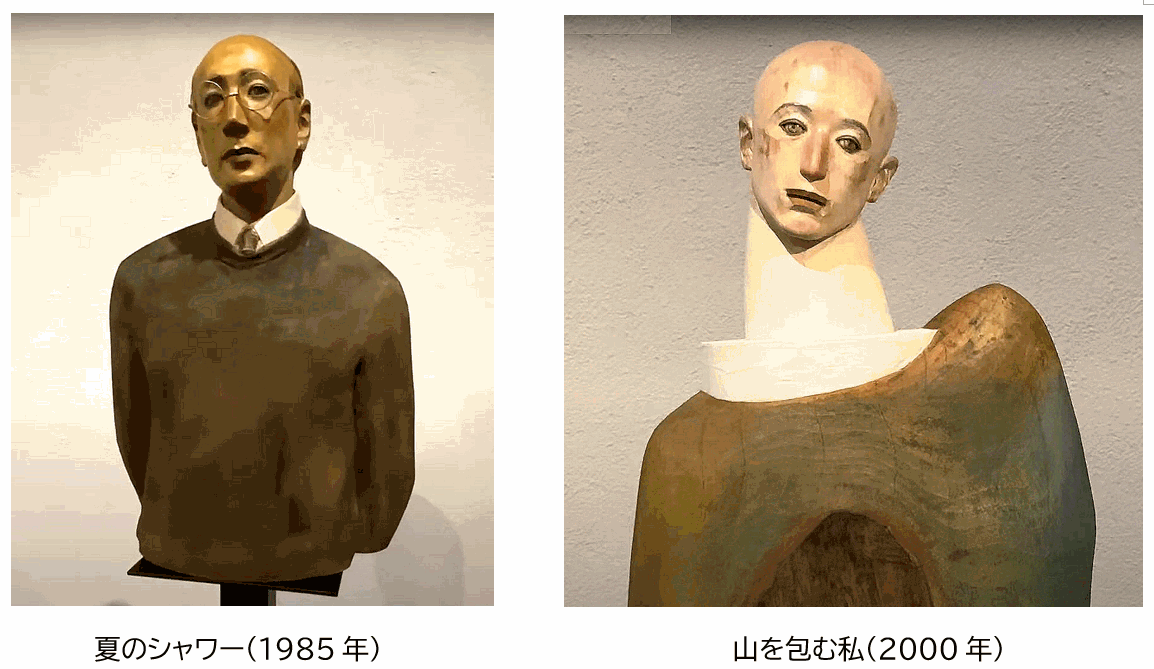
舟越桂は、そのような時代において、抽象彫刻が主流であった美術の潮流の中に、静かに具象彫刻を立ち上げ続けた。それは懐古的な写実ではなく、現代を生きる無名の人間の姿を通して、私たちの内側に触れる彫刻であった。
本稿では、舟越桂の初期ポートレート作品群を、「まなざしの先にあるもの」という視点から考察したい。
2. 最初の出会いとしての「まなざし」
多くの人が舟越桂の作品と最初に出会うのは、身体ではなく「目」である。うつろで、遠くを見ているようで、しかし何を見ているのかは分からない。左右の目は微妙に異なる方向を向き、視線は決して一点に収束しない。
そのまなざしは、
● こちらを見ていない
● 何かを訴えていない
● 未来や理想を指し示してもいない
にもかかわらず、鑑賞者を強く引き留める。
それはなぜか。それは、船越桂のまなざしが「意味を伝えるための視線」ではなく、「時間を共有させる視線」だからである。
3 コミュニケーションを拒む視線
通常、人物像のまなざしは、鑑賞者とのコミュニケーションの回路として理解される。こちらを見つめ、感情や意味を伝え、鑑賞者と「対話」や「対座」の関係を結ぶ。
しかし、舟越桂の彫刻のまなざしは、最初からこの回路を拒んでいる。こちらを見ない。語らない。意味を送り返してこない。
その結果、鑑賞者は、作品と意味のやり取りを行う前に、同じ場に、同じ時間に、ただ在る状態へと、いつのまにか置かれてしまう。
ここで成立しているのは対話ではない。沈黙の共有である。
4 「同座の入口」としてのまなざし
彫刻マトリックスの観点から見ると、舟越桂のまなざしは「同座の入口」として機能している。「同座」とは、鑑賞者が自覚的に選び取る態度ではない。むしろ、
● 読もうとしても読めない
● 応答しようとしてもできない
● 立ち去らずにいるしかない
という状態に、自然に追い込まれる地点である。
まなざしは、鑑賞者を招き入れるサインではない。こちらの態度を解除し、意味付けや評価を一旦停止させる働きを持つ。その結果、鑑賞者は、作品と同じ沈黙の時間に立たされる。これが「同座の入口」である。
5. 時間を発生させる彫刻
同座は一瞬では成立しない。船越桂のまなざしは、即時的な理解を拒み、解釈の速度を落とし、鑑賞者をその場に留める。その結果、鑑賞者の側に時間が発生する。「同座の中で、時間とともに滲み出てくる感覚」とは、この構造そのものである。
舟越桂の彫刻は、見ることを急がせない。むしろ、見ることを遅らせる。その遅延こそが、作品の核心である。
6. モデルの証言が示す「ずれ」
この理解を裏づけるのが、モデルとなった人々の証言である。彼らは共通して次のように語る。
● 似ているが、自分ではない
● 自分の内面が表現されているとは思えない
● しかし、失った何か、あるいは自分よりも純粋な何かを突きつけられる
舟越桂が掴み取ろうとしたのは、性格や心理、個性ではない。その人が、ある瞬間に、そこに在ったという事実の密度である。
それは似顔絵でも心理描写でもない。言い換えれば、「存在の切片」である。
7. 「存在の切片」とは何か
「存在の切片」とは、人間を説明する像ではない。人間が世界の中に在ってしまっているという事実が、ある断面として露出している状態である。
その前に立つと、鑑賞者は自然にその状態に巻き込まれる。理解する前に、共に在る時間が始まってしまう。
現代美術家・森村康政が語った「モデルを超えた、人間を超えたものでありながら、人間の中に宿っているかもしれないもの」という言葉は、船越桂の作品の本質を鋭く言語化している。
8. クスノキという素材が生む感覚
日曜美術館で語られていた「木や水や山が人間の姿に生まれ変わったらこうなるのではないか」という感覚は、本質的である。
それは、人間を自然の一部として描いたという意味ではない。人間と自然が、同じ生成の場から立ち上がっていることを、造形によって感じさせるという意味で本質的なのである。
クスノキという素材は、温度を感じさせ、彩色に覆い尽くされない生の質感を保つ。その結果、人物像は、人間でありながら、自然と人間の中間的存在として立ち現れる。
鑑賞体験は「理解」ではなく「滞在」になる。森林浴のように、時間をかけるほど、静かに効いてくる。
9. まなざしの先にあるもの
では、舟越桂の初期彫刻のまなざしは、何を見ているのか。
それは、
● モデル本人ではない
● 鑑賞者でもない
● 未来でも理想でもない
むしろ、人間が世界の中に投げ出されながら、それでも存在してしまっているという事実そのものを引き受けている。
まなざしは「見る」のではなく、「在る」ことを引き受けているのである。
10. 最後に―すべての起点としての初期作品
初期の舟越桂のポートレート彫刻は、無名の現代人を素材にしながら、個性や心理を超え、人間存在の根源的な在り方を静かに立ち上げる試みであった。
舟越桂のまなざしは、人間の内面を見つめているのではない。人間が人間として在ってしまう、その混沌と静けさの同時成立を見ている。
「同座の中で、時間とともに滲み出てくる感覚」という理解は、まさにこの初期作品群の核心である。
やがてスフィンクスや祈りの作品へと進むとき、このまなざしは消えるのではない。射程を拡張しながら、世界そのものへと向かっていく。初期作品群は、そのすべての起点である。
2026年6月30日更新