美とは―応答を引き受けることBeauty: Embracing the Responsibility of Response — A Dialogue Between Art and the Soul
Abstract
This essay begins with a fundamental question: What is beauty?
Through years of encountering sculpture, I have often found myself returning to this question. Some works move us immediately with their apparent beauty, while others seem strange, disturbing, or even incomprehensible. Such experiences suggest that beauty cannot be reduced to harmony, attractiveness, or visual pleasure alone.
My reflections were deeply influenced by Hiroshi Senju's book What Is Art? Senju argues that art originates in human imagination, which itself emerges from our relationship with nature and other people. Art is born when an artist seeks to communicate that imagination, and beauty arises when this communication is successfully received by another person. In this sense, beauty is not an inherent property of an artwork but an event that occurs between creator and viewer.
This understanding resonates strongly with my own experience of sculpture. When standing before a powerful work, I often find myself speechless. The sculpture does not explain itself, yet its silent presence begins to awaken questions within me: questions about how to live, what hope means, and what it means to be human. In such moments, beauty emerges as a deepened awareness of life itself.
From this perspective, beauty is not found solely within the artwork. It arises within the relationship between the artwork and the viewer. A sculpture becomes meaningful when it creates a space in which the imagination of the artist and the inner life of the viewer meet.
Yet this raises another question: Does beauty always emerge?
In reality, there are many works that leave us confused or indifferent. Some sculptures seem inaccessible, and their meaning remains hidden. Rather than treating these moments as failures, this essay argues that they are an essential part of the artistic experience.
The inability to respond to a work is not the end of aesthetic experience but its beginning. The crucial question becomes: How should we stand before a work that does not immediately speak to us?
To explore this question, I propose a framework called the Sculpture Matrix, a method for understanding the different ways viewers can relate to sculpture when beauty, meaning, and response remain uncertain.
今回はまず、「美とは何であろうか」という根源的な問いから考え始めたいと思います。日ごろ多くの彫刻作品に向き合っていると、私はしばしば、美しさとは何かという問題に立ち返らざるを得ません。
鑑賞した瞬間に「なんて美しいのだろう」と直感的に感動を覚える作品もあれば、一見するとグロテスクで、造形に戸惑い、どこに美が潜んでいるのか理解をためらう作品にも出会います。こうした経験は、美が単なる外見的な調和や快さではなく、より深い次元で生じる現象であることを示しています。
そこで改めて、私自身の言葉で「美とは何か」を考えてみたいと思います。その過程で出会ったのが、千住博の『芸術とは何か』でした。本書は、私の思索を整理するうえで重要な示唆を与えてくれました。
千住によれば、自然は人間の生の基盤であり、感性や想像力の源泉である。人間は本来、他者や自然との関係性のなかで生きる存在であり、その内側からイマジネーションが湧き上がる。そして、そのイマジネーションを他者へ伝えようとする行為こそが芸術であり、その伝達が成立し、人が「生きている」と強く実感する瞬間に、美が立ち上がる。美・芸術・人間は切り離せない関係にあり、自然との関係のなかで循環的に深まり続ける、というのである。
要するに、彫刻家が自らの内部に湧き上がる想像力を、誰かに伝えたいと願う。その切実な行為の軌跡が芸術であり、その想いが鑑賞者に届いたとき、美が生まれる。美とは作品に宿る属性ではなく、作り手と鑑賞者のあいだに生じる、生の実感の共有である。千住の主張は、そのように理解できます。
私はこの考え方に深く共感します。なぜなら、私自身が彫刻作品に出会うとき、常にそのプロセスを体験しているからです。最初の出会いの瞬間、作品が放つ空気や存在感に圧倒され、私は言葉を失います。作品は何かを語るわけでも、問いを突きつけるわけでもありません。しかし、その沈黙の前に立たされたとき、私は気づかぬうちに、自分自身の生き方や希望、人間の力強さとは何かを内側で問い始めています。
このときに生じる心の動きこそ、千住が述べる「美」の実感に他なりません。美とは、作品を通して自分自身の存在が揺さぶられ、同時に受け止め直される瞬間に立ち現れる現象なのです。
外的な造形の美醜を超え、作品が作り手のイマジネーションと鑑賞者の内面を静かにつなぐとき、生命の実感が深化し、その瞬間に美が生まれます。
私にとって、千住の理論は、日ごろの鑑賞体験と驚くほど符合します。美とは「作品そのもの」にあるのではなく、「作品との関係」のなかで生じるものだと言えるでしょう。そして、この関係性を引き受けること自体が、芸術体験の本質を形づくっているのではないかと考えています。
では、いつも美は生まれるのでしょうか。
現実には、作品の前に立っても、何も感じ取れないことがあります。自分の価値観ではまったく理解できない作品、どこに意味があるのかわからない作品、あるいは、どうしても距離を感じてしまい、作品と向き合えないと感じる瞬間も少なくありません。
そのようなとき、鑑賞者はどうすればよいのでしょうか。無理に理解しようとすべきなのか、それとも「自分には合わない」と判断して立ち去るべきなのでしょうか。
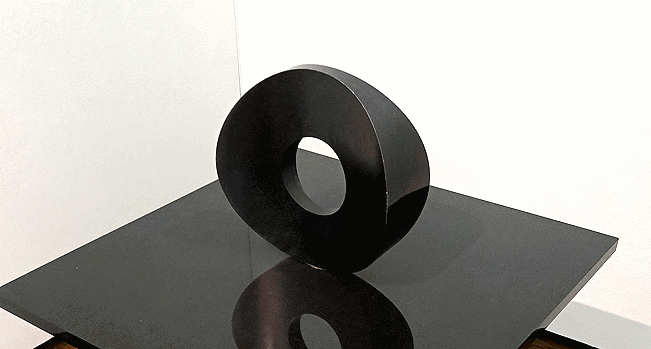
ディスタンスシリーズ 四つのアール(旭川市彫刻美術館)
本稿では、この「美の瞬間が生まれない時」を、失敗や欠如として扱いません。むしろそれを、現代彫刻を考えるうえで避けて通れない、重要な出発点として捉えます。
作品と応答できない状態に置かれたとき、鑑賞者はどのような立ち方を引き受けることができるのか。その問いを整理し、考えるための一つの方法として、私は「彫刻マトリックス」を提示したいと思います。