第2章 ダミアン神父像と私 Chapter 2. My Encounter with Father Damien
English Summary
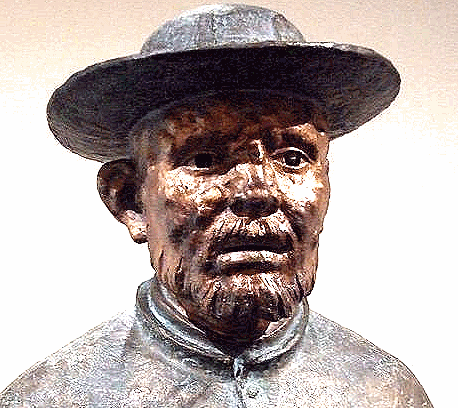
Yasutake Funakoshi wrote that although others might not see beauty in the disease-ravaged face of Father Damien, he could not help but perceive an overwhelming nobility within it and felt compelled to sculpt it. This statement profoundly affected me. As a Christian, Funakoshi likely recognized in Damien's suffering the dignity of a life devoted entirely to others. His sculpture was not merely an artistic creation but an expression of deep spiritual conviction.
As someone without religious faith, however, I find it difficult to perceive the face itself as beautiful. I admire Father Damien's life of selfless service—especially his acceptance of leprosy as a means of fully sharing the suffering of those he served—and I regard that life as profoundly beautiful. Yet I also recognize that I could never live in the same way. This realization leads me to reconsider the meaning of beauty itself. Perhaps true beauty is not what is pleasant to behold, but the courage to recognize the light hidden within suffering and painful reality. Funakoshi embodied this terrifying yet noble beauty in his sculpture, inviting viewers to question both their standards of beauty and their own way of living. Whenever I stand before Father Damien, I quietly hope that my own heart may one day come a little closer to perceiving the beauty that Funakoshi saw.
舟越保武は語っている。
「ただ私はこの病醜の顔に、恐ろしいほどの気高い美しさが見えてならない。このことは私の心の中だけのことであって、人には美しく見える筈がない。それでも私は、これを作らずにはいられなかった。私はこの像が私の作ったものの中で、いちばん気に入っている。」この言葉に、私は長い間、立ち止まらざるを得なかった。
信仰者としての彼には、この「病醜の顔」にこそ、人間の尊厳が宿って見えたのだろう。
キリスト教徒であった舟越は、ハンセン病患者に献身したダミアン神父の生きざまに、魂の深いところで共鳴したのだと思う。
それは、芸術家としてというより、一人の人間として「神を信じる者の宿命」に突き動かされた創作だったのではないか。だが、私には、この神父の姿を「美しい」と感じることが難しい。
少なくとも、日常の意識の中では、その顔を見て“美”と呼ぶことにためらいを覚える。
私は信仰を持たない。
だからこそ、船越の見た「気高い美しさ」を、心の深いところで理解することはまだできない。ダミアン神父は、病の徴候が自らの顔と手に現れたとき、
「われわれ癩(らい)患者は」と言えるようになったことを、むしろ喜びとして語ったという。
長く寄り添ってきた患者たちと、ようやく同じ苦しみを分かち合える――
その瞬間、彼は初めて真に「隣人」となった。
モロカイ島でのその生き方は、神の愛を信じた人間の、極限の「奉仕」であり、そこには確かに“美しさ”がある。私は、その生き方を「美しい」と感じる。
けれど、その生き方を自分が実践できるとは到底思えない。
だからこそ、私は畏れとともに、その美しさを見つめる。
「美しい」とは、決して快いものではない。
むしろ、見たくないもの、受け入れがたい現実の中に潜む光を見つめる勇気のことかもしれない。舟越は、その“恐ろしいほど気高い美”を、この像に刻みつけたのだろう。
この作品は、観る者の心を静かに揺さぶる。
それは、ダミアン神父の生き方に感動するだけでなく、
自分自身の「美の基準」と「生き方」そのものを問い直させる。幸いにも、私の住む兵庫県立美術館には、この「ダミアン神父」が所蔵されている。
またいつか、あの像の前に立ちたい。
そしてもう一度、
私の心がほんの少しでも「美しい」と感じることを――
静かに、祈るように、期待している。
2026年6月28日更新