佐藤忠良の風雅の誠 ― 同座する彫刻 Churyo Sato and the Sincerity of Poetic Grace: Sculpture in Shared Presence
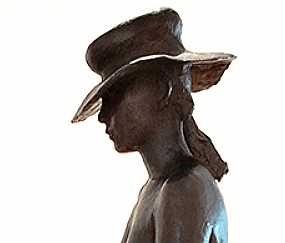
English Summary
The Sincerity of Fūga: Chūryō Satō and the Sculpture of Shared Presence
At the heart of Japanese culture lies a distinctive attitude: rather than confronting an object and assigning it meaning or value, one refrains from placing oneself in the position of judging or defining it. This attitude is exemplified by Matsuo Bashō’s concept of Fūga no Makoto (“the sincerity of poetic elegance”). Bashō’s famous statement, “Learn about the pine from the pine, and about the bamboo from the bamboo,” does not advocate observation or interpretation, but rather a humble participation in the being of things themselves.
This approach can be described as shared presence (dōza): the creator or viewer does not stand apart from the subject but exists alongside it. Bashō’s haiku about the old pond and the sound of a frog entering the water does not impose meaning or emotion. Instead, the reader is quietly placed within the same event and space.
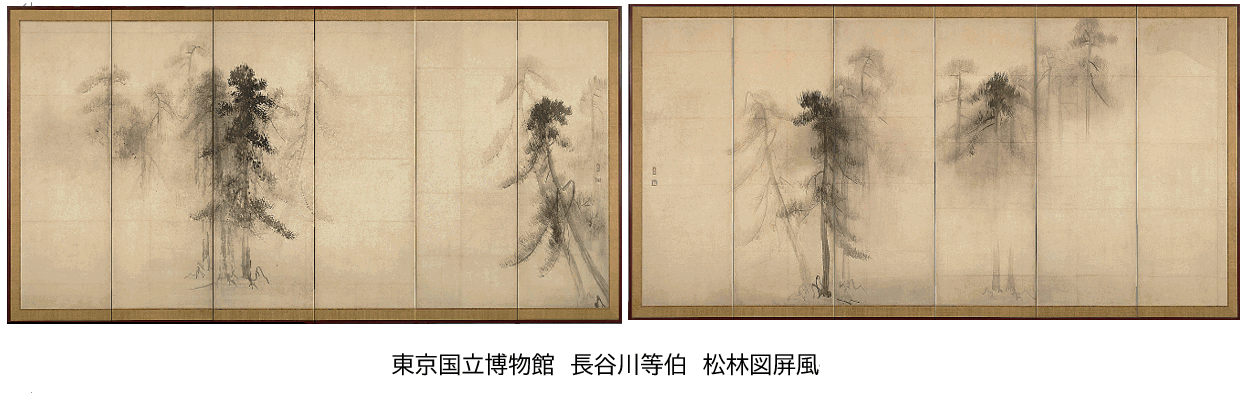
The same principle can be found throughout Japanese art. In Hasegawa Tōhaku’s Pine Trees Screen, the artist withdraws his own presence so that the pine forest may emerge naturally from mist and empty space. The artist does not dominate the subject but creates conditions in which it can reveal itself.
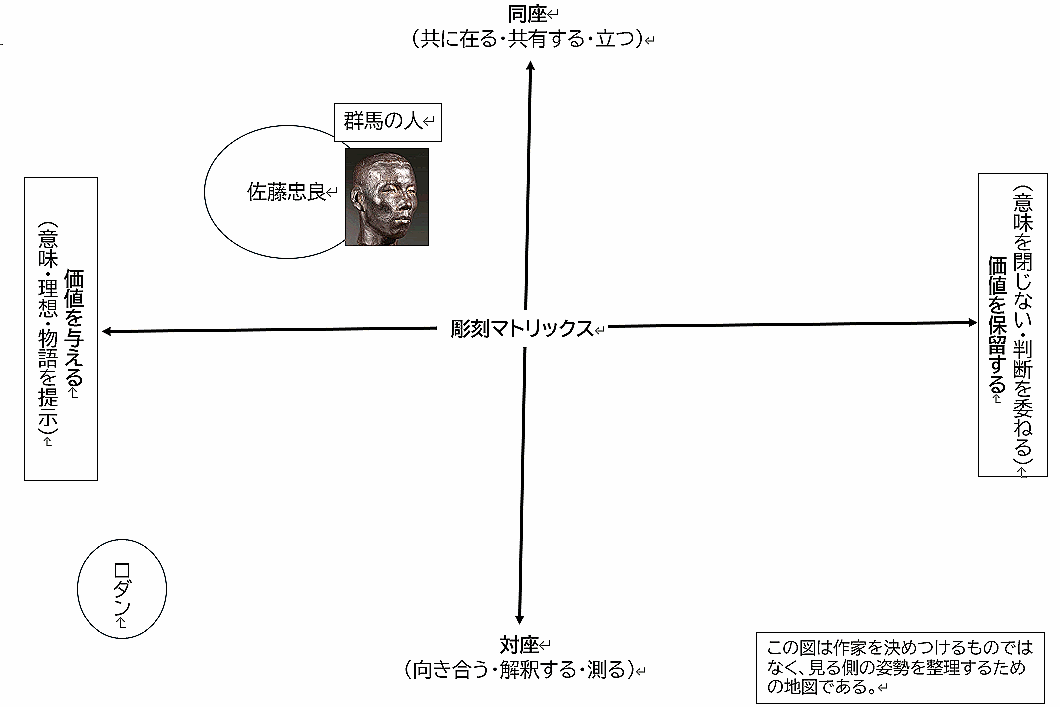
Viewed through the framework of the Sculpture Matrix, Chūryō Satō clearly belongs to the quadrant of “Shared Presence + Value Given.” His sculptures do not challenge viewers with symbolic complexity or dramatic expression. Instead, they present simple human figures standing, sitting, or bowing their heads in quiet existence.
Their appeal lies not in decoration or emotional intensity, but in their calm affirmation of human presence. Satō’s sculptures do not ask questions or demand interpretation. Before meaning arises, existence itself is already accepted and affirmed.
Importantly, Satō expressed this fundamentally Japanese attitude through the language of modern Western sculpture. His understanding of volume, structure, and human form belongs to an international sculptural tradition. Yet beneath this Western form lies the Japanese spirit of Fūga no Makoto.
This quality became especially visible in Man from Gunma, the work that established Satō’s reputation. The sculpture embodies an ethic of shared presence rather than assertion. Its expression is Western, but its philosophical foundation is deeply Japanese.
This helps explain why Satō’s work was appreciated in France. Western viewers encountered within a familiar sculptural language an unfamiliar value system—one in which the artist does not dominate the subject but steps back, allowing value to emerge naturally.
Ultimately, Satō’s sculpture can be understood as a three-dimensional realization of Bashō’s Fūga no Makoto. His works do not immediately communicate meaning or value. Instead, they create a space of shared presence in which beauty gradually emerges through silent coexistence.
This beauty is neither imposed nor abandoned. It arises only for those willing to share the same space as the sculpture. Satō’s enduring achievement lies in his ability to restore beauty without declaring it, allowing his sculptures to remain timeless, open, and quietly reassuring.
日本文化の根本には、「対象に向き合う」のではなく、対象に意味や価値を与える側に立たないという姿勢がある。
その典型が、松尾芭蕉のいう「風雅の誠」である。「松のことは松に習へ、竹のことは竹に習へ」という言葉は、自然を観察し解釈する態度ではない。作者自身の考えや感情を前に出さず、身を外に置くことを要請する態度である。ここでは、作者は前に出ない。松が松として在る、その在り方に同座すること自体が、すでに表現となる。
古池や 蛙飛びこむ 水の音
この句は、解釈や感情を誘導しない。読む者は、意味を与える立場に立つことを許されず、いつのまにかその立場の外へと退かされる。そこにあるのは、場と出来事と音だけであり、読む者はそれらと同じ条件に置かれて「同座」する。
この思想は、俳諧にとどまらず、日本の絵画や工芸、美術全般に通底する。たとえば長谷川等伯の「松林図屏風」において、描き手は自然を構成的に把握する主体ではない。作者の考えや意図を前に出さず、自らは一歩引くことで、霧と余白のなかに松林そのものが立ち上がる場を成立させている。ここに見られるのは、日本文化に固有の「同座」という立ち位置である。
この「同座」という座標を、彫刻マトリックスとして〈対座/同座〉×〈価値を問う/価値をあたえる〉の二軸で捉えるならば、佐藤忠良の位置は明確である。彼は一貫して「同座・価値をあたえる」という象限から動かなかった。
佐藤忠良の彫刻は、見ていて気持ちがいい。それは装飾性や感情表現の豊かさによるものではない。彼の人物像は、過剰な身振りや象徴を排し、立つ、座る、うつむくといった最低限の姿勢にとどまる。
しかし、その静けさは、人間が人間としてそこに在ることを、否定することなく受け止めている。ここで彫刻は、鑑賞者に問いを突きつけない。意味や解釈に先立って、存在そのものがすでに正しい位置に置かれており、その前提が作品全体を静かに貫いている。
注目すべきは、佐藤忠良がこの日本的立ち位置を、形式的な「和」によって示さなかった点である。彼の彫刻語法は明らかに西洋近代彫刻の系譜に属し、人体の量感、構造理解、マッスの処理は国際的に共有可能な表現である。
その転機となったのが、「群馬の人」である。佐藤忠良が初めて広く評価され、その後の制作の起点となったこの作品には、同座の姿勢が明確に表れている。
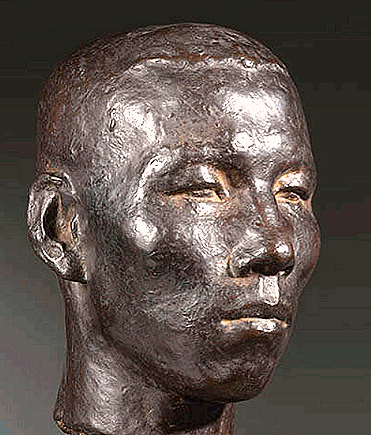
群馬の人
そこに内在する倫理は、日本文化の「風雅の誠」、すなわち同座の精神と深く響き合っている。表現は西洋的であり、立脚点は日本的なのである。
この点において、佐藤忠良がフランスで個展を開催できた理由は明確である。西洋の鑑賞者は、理解可能な造形の内部に、主体が前に出ない、静かで異質な価値観を見出した。
それは、西洋から見た日本文化・日本芸術の本質―対象を支配せず、意味や価値を与える立場から退くことで価値を生み出す態度―が、彫刻として可視化された瞬間であった。
結論として、佐藤忠良の彫刻は、松尾芭蕉のいう「風雅の誠」を、三次元造形において静かに実践した仕事であると考える。
佐藤の彫刻は、鑑賞者に意味や価値を即座に要求しない。まず像と同座する場を成立させ、その沈黙の持続のなかで、美は語られることなく、しかし確かに回復される。
それは、価値を主張する美ではない。また、価値を放棄した無意味の美でもない。同座を引き受けた者にのみ、後から立ち上がる美である。
この「価値を語らずに美を回復する」という不動の姿勢こそが、佐藤忠良の彫刻を時代や解釈から自由なものとし、今なお多くの人にとって説明を要しない「気持ちのよさ」を保ち続けている理由である。