生きるということー日高正法「啓示」 The Meaning of Living: Masanori Hidaka's Revelation
English Summary
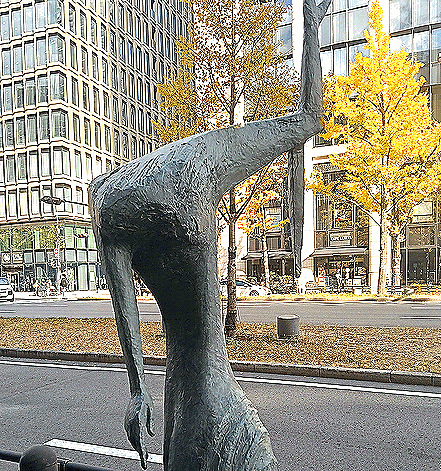
This chapter examines Masanori Hidaka’s Revelation, a sculpture installed along Osaka’s Midosuji Sculpture Street, as a profound inquiry into the condition of human existence. Surrounded by figurative works that bring visual order to the urban landscape, Revelation stands apart through its unsettling silence. Its left arm rises toward the sky, its right arm descends toward the earth, and both remain rigidly vertical. Yet the figure has no head. Although it resembles a human body, it withholds the features through which identity, thought, and meaning are usually conveyed.
The title Revelation traditionally implies a truth bestowed upon humanity by a divine source. In Hidaka’s sculpture, however, no god, doctrine, or message is present. This absence is not a deficiency but a deliberate void. Revelation is relocated from the religious sphere to the interior of the human being. It becomes the irreversible moment in which a person is opened to a truth about the self and can no longer return to a state of unawareness.
The vertical arms do not express prayer or supplication. Rather, they function as axes supporting something that has already occurred. The sculpture embodies not the expectation of understanding but the condition of having already understood. The tension of the arms records the irreversible force of that realization.
The absence of the head is equally decisive. In religious sculpture, the head often serves as the center of wisdom, enlightenment, compassion, or divine intelligence. By removing it, Hidaka refuses to reduce revelation to belief, doctrine, or intellectual comprehension. What appears before the viewer is not a person who possesses knowledge, but a body transformed by what it has come to know. Awakening is represented not as an idea but as a physical posture.
In contrast to the vertical arms, the torso leans away from equilibrium. This inclination suggests that revelation does not reconcile the individual with the world. Awareness does not eliminate suffering, contradiction, or disorder. On the contrary, it may make the distortions of reality even more visible. The sculpture therefore offers no image of salvation. It represents a human being who continues to stand within an unsaved world.
Although the legs are not clearly articulated, the figure unmistakably remains grounded. There is no transcendence or escape. Life continues, practical reality remains, and the human being must stay upon the earth. Standing becomes the minimum condition for accepting existence.
In Revelation, the raised arms embody awareness, the inclined torso bears the tension between the self and the world, and the silent legs affirm continued existence within reality. These elements form an integrated image of the human condition: to become aware, to live with contradiction, and nevertheless to remain standing.
The sculpture offers no answer. Instead, it transforms the act of living itself into a question. Standing silently in the city, it continues to ask the viewer:
After you have become aware, how will you continue to stand?
1 街路に立つ問い
大阪・御堂筋の彫刻ストリートには、多くの具象彫刻が並んでいる。人の姿をかたどり、都市の風景に静かな秩序を与える像が多い。その流れの中で、日高正法の「啓示」は、どこか居心地の悪い沈黙をまとって立っている。
左手は天へ、右手は地へ。両腕は地面に対して垂直で、しかも強い緊張を保っている。だが、頭部はない。人の像でありながら、人を説明する要素が欠けている。出会った瞬間、「美しい」とも「分かる」とも言えず、ただ足が止まる。これは像というより、問いが立っているのではないか。そんな感覚を覚える。
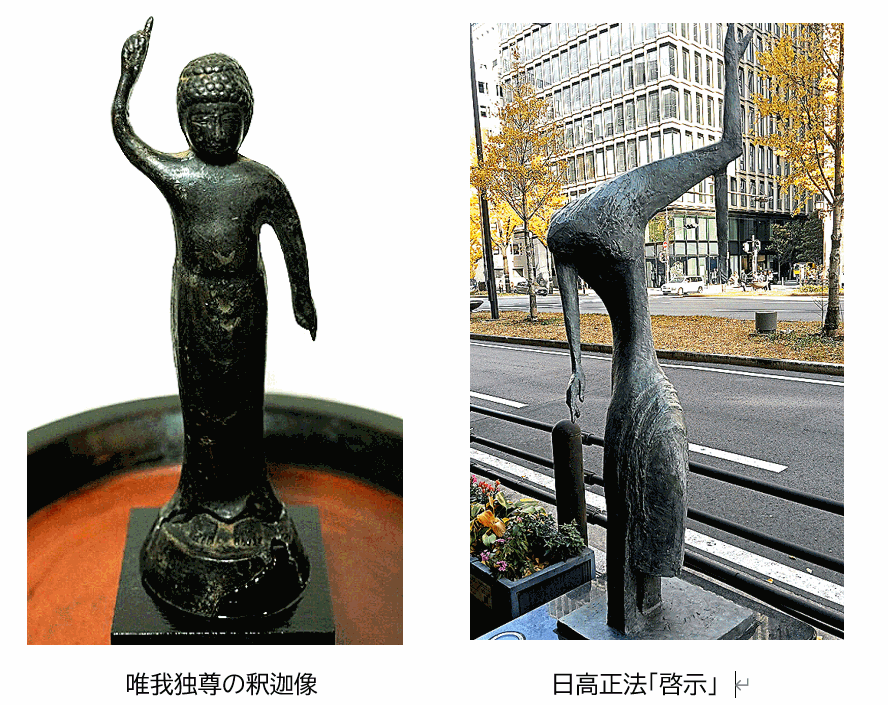
その身振りから、誕生仏、唯我独尊の釈迦像が思い浮かぶ。しかし似ているのは、形の輪郭だけである。信仰を支えるための物語も、象徴も、ここにはない。似ているが、帰属先がまったく異なる。その差異こそが、この像の出発点である。
2 啓示という言葉の空洞
「啓示」とは、本来、神が人に真理を示す出来事である。そこには必ず与え手があり、啓示は人間の外部からやってくる。だが、日高正法の「啓示」には、与え手が存在しない。神も仏も、真理の内容も示されない。啓示であるはずなのに、何が啓示されたのかが語られない。
この空白は欠落ではない。意図的な空洞である。日高は、「啓示」という言葉を宗教から切り離し、人間の内部へと移し替えている。ここで起きているのは、真理の授与ではなく、人が自分自身に対して開かれてしまう瞬間である。逃げることも、取り消すこともできない気づき。その出来事に、あえて「啓示」という名を与えている。
3 両腕の垂直――確かに起こったこと
「啓示」の両腕は、ためらいなく垂直に立ち上がっている。これは祈りの姿勢ではない。祈りには願いがあり、依存がある。しかしこの腕は、何かを求めて伸ばされているのではなく、すでに成立した事実を支える軸として存在している。
ここには「これから分かる」のではなく、「分かってしまった」という時間がある。啓示は予感ではない。可能性でもない。それは、すでに起こってしまった出来事であり、その後戻りできなさが、この腕の緊張に刻まれている。
4 頭部の不在――信仰を拒む造形
この像に頭部がないことは、決定的である。宗教像において、頭部は意味の中心であり、悟りや慈悲、神的知性が宿る場所だ。しかし「啓示」は、それを持たない。
これは思考の否定ではない。信仰の否定でもない。むしろ、啓示を理解や信仰の問題に矮小化することへの拒否である。日高が示しているのは、「分かった人」ではなく、分かってしまった後の身体だ。覚醒は理念ではなく、姿勢として現れる。その徹底が、無頭像という選択に表れている。
5 傾く胴体――救済されない世界
両腕が垂直であるのに対し、胴体は傾いている。像は安定して立っているが、どこか世界と噛み合っていない。この傾きは、失敗でも偶然でもない。
啓示があっても、世界は救済されない。気づいたからといって、生活が楽になるわけでも、社会が整うわけでもない。むしろ、気づいてしまったがゆえに、世界の歪みや矛盾が、より鮮明に立ち現れてしまう。
胴体の傾きは、その感覚を引き受けている。「啓示」は、救済の像ではない。救済されないまま立ち続ける人間の像である。
6 語られない脚――地面から逃げないこと
脚は具体的に表されていない。しかし像は、確かに両足で立っている。ここには、超越も離脱もない。啓示は起こったが、人はこの地面から離れない。生活は続き、問題は残る。
脚が語られないのは、現実があまりにも個別で、言葉にしきれないからだろう。だが、立っているという事実だけは消されていない。それは、人間が生を引き受ける最低限の条件である。
7 一体化された人間
「啓示」において、啓示は両腕として立ち上がり、現実とのずれは胴体に刻まれ、生活への立脚は脚として沈黙している。
これらは分断されていない。人間とは、気づきを得ながら、矛盾を抱え、なお現実に立ち続ける存在である。日高正法は、その厄介で、しかし誠実な姿を、物語も救済も与えず、ただ形として差し出した。
「啓示」は答えを与えない。それは、生きるという状態そのものを、問いとして立たせる彫刻である。だからこそこの像は、都市の中で、今も静かに問い続けている。
あなたは、気づいてしまったあと、どのように立ち続けるのか、と。
2026年7月21日 更新